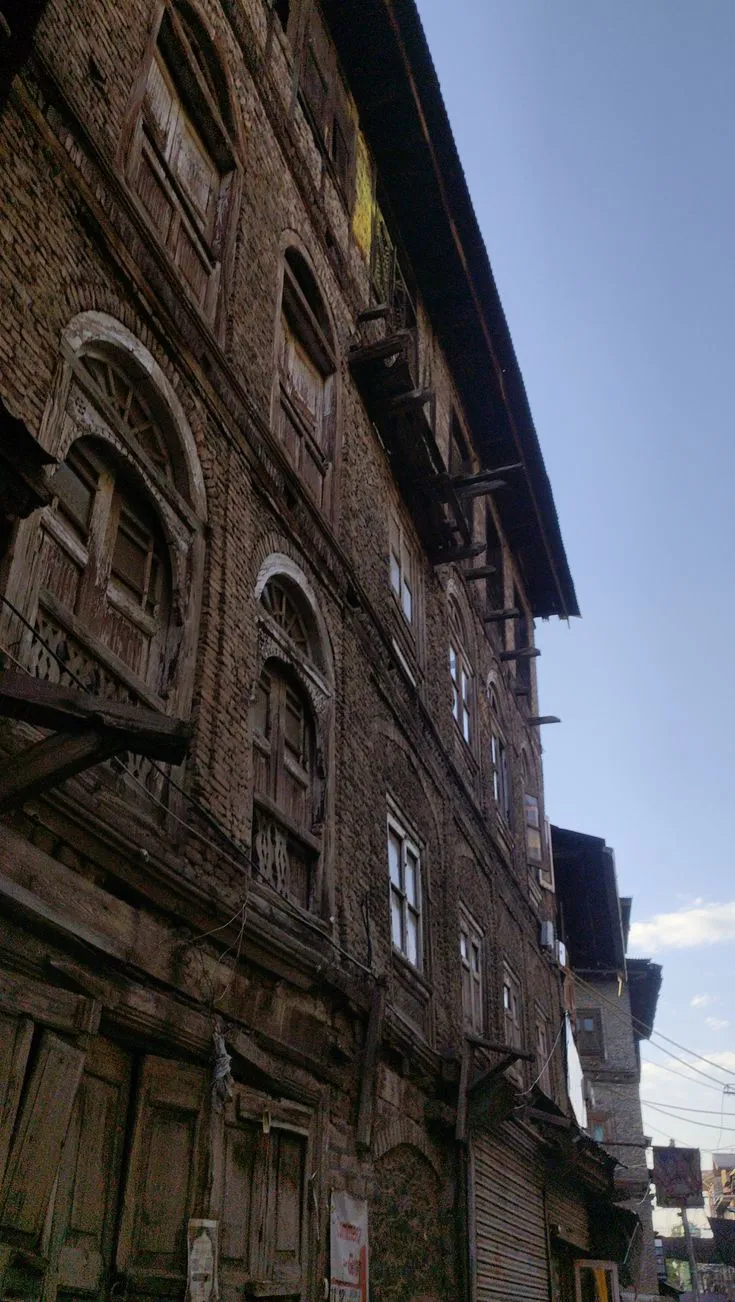
For seventy years, owning a home in Kashmir was legally off-limits to almost everyone who wasn't already from there. That changed in 2020. Since then, three things have converged at the same time: a legal market that didn't exist five years ago, a tourism base that has repeatedly cleared two crore annual visitors, and new all-weather road and rail links that are opening up areas that were previously cut off half the year.
That combination is why family offices, NRIs, and boutique hospitality operators are now looking seriously at Pahalgam, Gulmarg, and Patnitop — not as speculative land bets, but as income-producing hospitality assets. This guide walks through what's actually changed legally, what the tourism numbers really show (including the parts that don't make it into the marketing brochures), how fractional ownership and homestay models work in practice, and how the three main destinations compare. It closes with a concrete due-diligence checklist for anyone ready to move from research to a term sheet.
This is a market with real upside and real, specific risks. Both deserve equal space here.
1. The Legal Foundation: What Non-Residents Can Actually Buy
From Permanent Residency to an Open Market
Before August 2019, Jammu & Kashmir's special constitutional status under Article 370 and Article 35A meant only "permanent residents" of the state could own land there — a status closed to Indian citizens from anywhere else. In October 2020, the central government amended or repealed the state laws that enforced this (including the J&K Alienation of Land Act and the Big Landed Estates Abolition Act), removing the "permanent resident" requirement from property transactions. In December 2023, a five-judge Supreme Court bench unanimously upheld the constitutionality of the Article 370 abrogation, which settled the main legal challenge to this framework — it's no longer pending litigation, though it remains a live political issue for some regional parties.
The practical result: any Indian citizen can now buy non-agricultural property in J&K without holding a domicile certificate.
What You Can — and Can't — Purchase
Non-agricultural land and built property in municipal and urban areas is open to any Indian citizen — this covers most residential plots, apartments, and commercial hospitality land.
Agricultural land remains restricted to agriculturists; a non-agriculturist (which most outside investors will be) generally cannot buy it directly. It's possible to build a residence or farm structure on agricultural land, but the district Tehsildar must approve it and the plinth area is capped at 400 square metres.
Ladakh is a separate Union Territory with its own, still-restrictive land rules. This guide — and the 2020 land-law changes — apply only to J&K, not Ladakh.
Certain protected categories, like land in Kashmir's Saffron Belt, have their own conversion procedures.
NRIs vs. Foreign Nationals: A Critical Distinction
The brief for this piece uses "non-residents" loosely, so it's worth being precise: the 2020 changes opened the market to Indian citizens from outside J&K, including NRIs. They didn't change India's general rules for foreign nationals, who — with the exception of Overseas Citizens of India (OCIs) and Persons of Indian Origin (PIOs) — are still barred from directly purchasing immovable property in India under FEMA, agricultural or otherwise, absent special RBI approval. If your investor base includes non-Indian passport holders, that's a structuring question to raise with counsel early, not after a term sheet is signed.
RERA and the Paperwork That Protects You
J&K notified its Real Estate (Regulation and Development) Act rules in August 2020. For a buyer, this matters practically: any project marketed for sale by a developer should be RERA-registered, which gives you a channel to verify project approvals, timelines, and the developer's track record before you commit capital — especially relevant if you're buying into a resort or homestay development rather than a standalone plot.
2. Why Now: The Demand Story Behind the Boom
The Numbers, Honestly
J&K's tourism department has reported cumulative visitor totals to the Legislative Assembly at several points through the year, and the running totals reported in different sessions don't always reconcile cleanly with each other — a reminder to treat any single headline figure as directional rather than exact, and to check the Tourism Department's own site for the latest confirmed count. That said, the overall shape of the data is clear:
2023 and 2024 both comfortably cleared two crore total visitors, with 2024 the record year at roughly 2.3 crore (domestic and foreign combined) — a genuine milestone, and the basis for the "2-crore" figure often quoted about this market.
2025 came in lower, at roughly 1.6–1.8 crore depending on which assembly disclosure you use, still a large number historically but a step down from 2024.
The reason for that dip matters for anyone underwriting a Pahalgam investment specifically: on 22 April 2025, terrorists killed 26 civilians, most of them tourists, at Baisaran meadow near Pahalgam — the deadliest attack on civilians in the Kashmir valley in a quarter-century. Bookings across the valley were cancelled en masse in the weeks that followed, and several tourist sites were temporarily closed. Footfall recovered through the rest of the year but didn't fully close the gap to 2024's record.
This isn't a reason to avoid the market — J&K's tourism sector has shown it can absorb shocks and rebuild, and the broader multi-year trend is still upward. But any investment thesis built on "tourism only ever goes up" is building on a number that has, in fact, gone down before, and could again. Treat this as a variable to underwrite around, not a footnote.
Infrastructure Is Rewriting the Map
The strongest structural argument for this market isn't last year's tourist count — it's what's been physically built in the last 18 months:
The Udhampur–Srinagar–Baramulla Rail Link, including the Chenab Bridge (the world's highest railway arch bridge), now carries the Vande Bharat Express between Katra and Srinagar in around three hours — a trip that took six to seven hours by road.
The Z-Morh (Sonamarg) Tunnel, opened in January 2025, gives Sonamarg all-weather access for the first time, cutting a journey that used to close for winter down to a 15-minute drive.
The Zoji La Tunnel, targeted for 2028, will extend that same all-weather access from Srinagar all the way to Ladakh.
Each of these changes the addressable market for a property, not just the commute. A destination that used to be seasonal by necessity — closed by snow or a full-day drive — becomes a viable year-round asset once the road or rail link opens. That's the kind of structural tailwind that tends to matter more to a 10-year hold than a single year's tourist count.
The Other Side of the Ledger: Tourism's Vulnerability
Worth stating plainly before moving on: J&K sits in a region with an active border dispute and a documented history of security incidents affecting tourism, most recently and severely in April 2025. Any investment thesis here should build in a genuine downside scenario — several months of near-zero occupancy following an external shock — rather than treating the 2024 peak as the reliable baseline. This is covered in more depth in the due-diligence section below.
3. The Shift Toward Experiential, Eco-Conscious Hospitality
What "Experiential" Means on the Ground
The growth segment in J&K hospitality isn't large hotel chains adding room inventory — it's small-format stays: 4–10 room boutique lodges, converted traditional homes, and eco-cabins that sell proximity to a specific landscape or activity (a trek, a ski slope, a river, a pilgrimage route) rather than generic hotel amenities. This mirrors a pattern playing out across Indian hill destinations, but J&K's newly-opened land market and largely undeveloped natural assets — alpine meadows, deodar forests, glacial rivers — give it more room to build genuinely differentiated, low-density product than more saturated hill stations.
The Policy Tailwind
The J&K administration has been actively courting this kind of investment, not just tolerating it:
The Ecotourism Policy frames tourism development around low-impact, community-benefiting projects in the region's forest and wilderness areas, with local Project Implementing Agencies co-managing sites in partnership with the Forest Department.
The Homestay and Paying Guest House scheme simplifies registration for individual property owners wanting to rent rooms to tourists, and has specifically targeted expansion to 75 newly-added tourist destinations and five tourist villages around Srinagar's Dal Lake.
Under the J&K Industrial Policy 2021–30, the tourism and hospitality sector was extended "focus sector" status, and the government has stated capital investment incentives of up to 30% (urban/Zone A) or 50% (rural/Zone B) on construction and durable physical assets for eligible service-sector projects — a meaningful subsidy if your eco-resort qualifies, though eligibility criteria and caps need to be confirmed directly with the J&K Department of Industries and Commerce, as terms of this kind are revised periodically.
Tourism has separately been granted "industry status" in J&K, which typically unlocks easier access to institutional financing and infrastructure support compared to being treated as a standalone commercial activity.
4. Two Ways to Earn Passive Income: Fractional Ownership vs. Boutique Homestays
Boutique Homestays: The Owner-Operator Model
You own the property outright (or through a company/LLP) and either operate it yourself or hand day-to-day operations to a local management partner or hospitality operator in exchange for a share of revenue. Registration with the J&K Tourism Department is mandatory and involves documentation on the property, ownership papers, fire safety, and a police verification — a process that typically takes several weeks. This model gives you full control and full upside, but also full exposure to occupancy risk, staffing challenges in a remote location, and the seasonal nature of most of these destinations.
Fractional Ownership: Co-Owning Through a Structure
Fractional ownership means multiple investors jointly own a single property or portfolio, typically through a special purpose vehicle (SPV), sharing both rental income and capital appreciation in proportion to their stake. It's worth understanding exactly which version of "fractional" you're being offered, because India's regulatory landscape for this has just changed:
In March 2024, SEBI introduced the SM REIT (Small and Medium Real Estate Investment Trust) framework, bringing previously unregulated fractional ownership platforms under formal oversight. SM REITs require a minimum scheme size of ₹50 crore, at least 200 investors, a minimum unit price of ₹10 lakh, and mandatory listing on a stock exchange — which solves the liquidity problem that plagued earlier private fractional deals, where exiting often meant waiting for the platform to find a new buyer.
The catch for a single boutique vacation home: SM REITs are built for pooled, larger-scale, revenue-generating commercial assets, not a single six-room lodge in Pahalgam. Most individual vacation-home fractional deals in India today — including in J&K — are still structured as private co-ownership arrangements through an LLP or private company, outside the SEBI-regulated framework. That's not necessarily a problem, but it does mean the investor protections SM REITs are designed to provide (mandatory disclosure, independent valuation, exchange-based exit) generally won't apply. Ask directly which structure you're being offered, and have a lawyer review the SPV documents, exit mechanics, and how disputes between co-owners get resolved before committing.
Illustrative Economics (a Worked Example)
The figures below are illustrative only — built to show how the math works, not a projection for any real property. Actual yields depend heavily on location, build quality, management, and the occupancy assumptions discussed above.
Say a 6-room eco-lodge near Pahalgam costs ₹3 crore to acquire and build, fully furnished. If it achieves 45% average annual occupancy (accounting for the winter off-season and a margin for disruption) at an average nightly rate of ₹8,000, gross annual room revenue would run around ₹79 lakh. After operating costs — staffing, utilities, maintenance, management fees, and marketing, which for a small remote property commonly run 55–65% of revenue — net operating income might land somewhere in the ₹28–36 lakh range, a gross yield before financing costs and taxes of roughly 9–12% on the ₹3 crore build cost. That's a reasonable, not extraordinary, yield for a hands-on hospitality asset — and it assumes no repeat of a season like 2025's. Run your own numbers with a local operator's actual cost data before treating any percentage as reliable.
5. Where to Invest: Pahalgam, Gulmarg, and Patnitop Compared
Pahalgam
A river-valley town in Anantnag district, historically one of Kashmir's most visited leisure destinations and a staging point for the Amarnath Yatra pilgrimage. It has the most developed tourism infrastructure of the three and the broadest visitor base — leisure travellers, honeymooners, and trekkers. It's also the location of the April 2025 attack, which makes it, right now, the destination where security due diligence and realistic occupancy modelling matter most. Recovery has been underway but should be verified with current, on-the-ground occupancy data rather than assumed.
Gulmarg
A high-altitude ski destination (base elevation around 2,650m) built around winter sports — it has India's highest and longest cable car, the Gulmarg Gondola, and hosts organized skiing and snowboarding through the winter. Visitor numbers here are smaller in absolute terms than Pahalgam or the Jammu pilgrimage circuit, but the buyer profile skews toward higher-spending winter-sports and luxury travellers, which supports a premium boutique or eco-lodge positioning better than a volume play. Seasonality is the central planning constraint: a Gulmarg property needs a credible shoulder-season or summer strategy (trekking, golf on the world's highest green golf course, meadow tourism) to avoid sitting empty eight months a year.
Patnitop
A hill station in the Jammu division, on the Jammu–Srinagar highway near the Chenani-Nashri tunnel, and within reach of the Vaishno Devi pilgrimage corridor through Katra — by far the highest-volume tourism draw in J&K, with tens of millions of pilgrim visits annually. Patnitop's advantage is accessibility: it's closer to the plains, less snowbound, and easier to reach year-round than the Kashmir-valley destinations, making it a lower-risk, more accessible entry point, particularly for a homestay or mid-market eco-resort aimed at pilgrim-adjacent leisure travel rather than a premium alpine positioning.
| Pahalgam | Gulmarg | Patnitop | |
|---|---|---|---|
| Region | Kashmir valley (Anantnag) | Kashmir valley (Baramulla) | Jammu division |
| Core draw | Leisure, trekking, Amarnath Yatra | Skiing, winter sports, luxury | Accessibility, pilgrim-adjacent leisure |
| Peak season | Spring–autumn | Winter (skiing) | Year-round, pilgrim traffic |
| Access | Road via Srinagar | Road + gondola | On NH44, near rail/Vaishno Devi |
| Key 2025 risk factor | Site of April 2025 attack | Weather-driven seasonality | Lower relative security exposure |
| Best-fit model | Boutique leisure lodge | Premium ski-season resort | Homestay / mid-market eco-stay |
6. Risk, Due Diligence, and Structuring the Deal
Title and Land-Use Verification
Land titles in India — J&K included — are presumptive, not conclusive; a clean-looking sale deed doesn't guarantee an unbroken chain of ownership. Before any commitment, verify the seller's title through the local revenue records (jamabandi/mutation records), confirm the land's classification (agricultural vs. non-agricultural — this determines whether you can legally buy it at all), and check for pending litigation, government acquisition notices, or encumbrances. This is not a step to shortcut, and it's the single most common source of disputes in property purchases across India generally, not just J&K.
Political and Security Risk
Build a realistic downside scenario into your model, not just an average-case one. Understand what insurance is actually available and priced for hospitality assets in the region, and what business-interruption coverage (if any) would apply following a security-related closure. Talk to existing operators in your target destination about how they managed 2025, not just how they're marketing 2026.
Structuring for NRIs: FEMA, Taxation, Repatriation
If you're an NRI, confirm current FEMA rules on repatriating rental income and eventual sale proceeds — these are generally permitted for residential and commercial property but come with documentation and repatriation limits, and rules are periodically revised. Get a chartered accountant to map out the tax treatment on both sides (India and your country of residence) before you buy, not after your first rental income arrives. This guide isn't a substitute for that advice — treat everything here as a starting point for questions to bring to your own lawyer and CA, not a final answer.
Operational Realities of Remote, Seasonal Assets
A boutique property in a Himalayan valley faces practical constraints that don't show up in a spreadsheet: skilled hospitality staff are harder to recruit and retain in remote locations, supply chains for maintenance and furnishings run longer and cost more, and winter closures (outside Gulmarg's ski season) can mean months of zero revenue with ongoing caretaking costs. Factor a realistic local operating partner into your plan from day one rather than assuming remote management will work.
Conclusion: Your Next Steps
J&K's vacation-home and eco-resort market is real, legally open to non-residents for the first time in decades, and backed by infrastructure investment that's genuinely changing which destinations are viable year-round. It is not, however, a market where you can treat a headline tourist-arrival number as the whole story — 2025 showed how quickly that number can move, and why.
If you're ready to move from research to action:
Verify current data directly — check the J&K Tourism Department and Department of Industries & Commerce websites for the latest visitor figures and current industrial-policy incentive terms, since both are revised periodically.
Engage a local property lawyer before you shortlist land, to confirm title and land classification on any specific parcel.
Decide your model early — homestay/owner-operator versus fractional co-ownership are genuinely different businesses with different time commitments, and the choice should drive your site search, not follow it.
Visit in the off-season, not just peak season, to see what the property and destination actually look like for eight months of the year, not two.
Talk to at least two existing operators in your target destination about their real occupancy and cost numbers before underwriting your own.
Done with clear eyes about both the tailwinds and the risks, this is a market with a genuine, differentiated investment case — just not the risk-free one that a "2 crore tourists and rising" headline alone suggests.